

Dive Brief:
- Hyperscalers including Google, Microsoft and AWS will account for 67% of data center capacity by 2031, driven by significant AI infrastructure investments, according to a report from Synergy Research Group published Tuesday. Enterprise on-prem data centers will drop from 56% of total data center capacity in 2018 to 19% by 2031, the firm said.
- “Almost 60% of that hyperscale capacity is now in own-built, owned data centers with the balance being in leased facilities,” according to the report. “With non-hyperscale colocation capacity accounting for another 20% of total capacity, that leaves on-premise data centers with just 32% of the total.”
- On-prem data center’s share of total capacity remained relatively constant over the last eight years, even seeing a boost from enterprise AI deployments and GPU servers, according to the report. However, by 2031, hyperscalers will have 14 times the amount of data center capacity than 2018 as AI accelerates expansion.
Dive Insight:
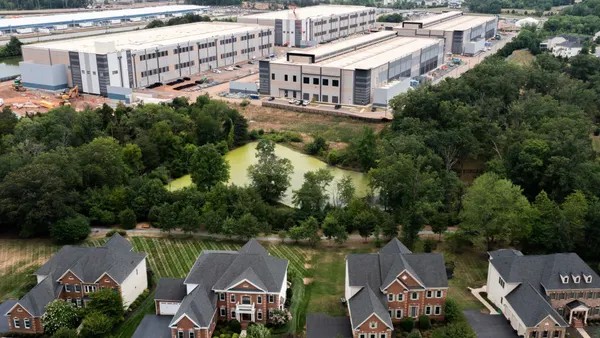
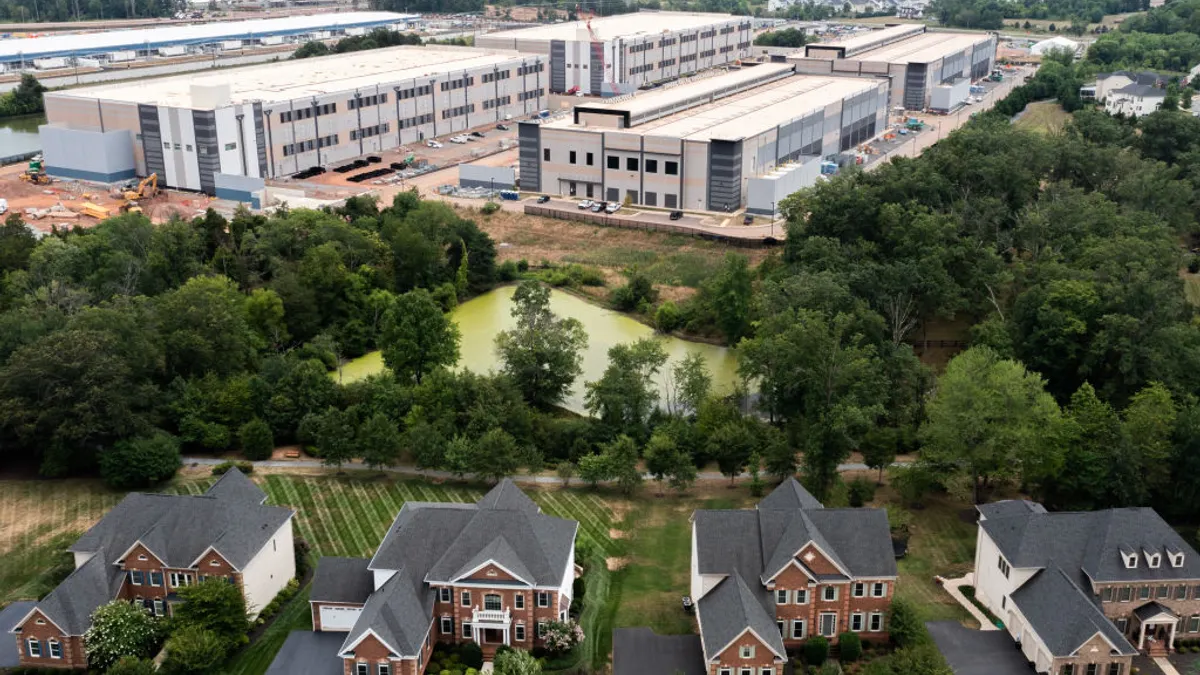
As enterprises rush to adopt AI, hyperscalers are building data centers to keep up with demand and navigate capacity crunches while facing rising concerns about electricity costs and community pushback.
The top three hyperscalers, Microsoft, Google and AWS, plan to invest more than $500 billion in capital expenditures for infrastructure supporting AI deployment in fiscal year 2026. Hyperscalers operated 1,297 large data centers globally in Q3 2025, nearly triple the amount from 2018, according to a separate SRG report. That number rose to 1,360 by the end of 2025.
“We will increase our total AI capacity by over 80% this year and roughly double our total data center footprint over the next two years, reflecting the demand signals we see,” Microsoft CEO Satya Nadella said during the company’s Q1 2026 earnings call in October.
It’s not just hyperscalers vying for compute power. Large language model provider Anthropic earlier this week announced an expanded partnership with Google to secure its TPU chips, supplied by Broadcom, adding multiple gigawatts of compute capacity starting in 2027. Meanwhile, LLM provider OpenAI in October partnered with AMD to add six gigawatts of AI compute capacity.
Despite massive investments to expand compute capacity, the tech industry is already facing shortages. During Microsoft's Q1 2026 earnings call, EVP and CFO Amy Hood said Microsoft was struggling with a capacity shortage expected to extend throughout the fiscal year.
Naveen Chhabra, principal analyst at Forrester, previously told CIO Dive in an email that CIOs will need to prepare for compute capacity being a constrained resource.
In addition to capacity shortages, hyperscalers are grappling with concerns about how data centers will raise electricity costs. The U.S. Energy Information Administration said data center electricity demand could drive price hikes of up to 79% in areas like Texas by 2027.
The concern has not gone unnoticed. OpenAI in January committed to paying its own way on energy across its Stargate projects, a $500 billion AI infrastructure push announced by President Donald Trump in January 2025.
Last month, the White House announced the Ratepayer Protection Pledge, a voluntary commitment from tech providers including Google, Oracle, xAI, Meta, Microsoft, OpenAI and Amazon to help offset electricity costs as data center buildouts continue.
The tech industry is also facing pushback on data center builds from local and state governments. A city in Wisconsin recently passed an anti-data center referendum, according to Politico reporting. Meanwhile, the Wall Street Journal reported that Maine could freeze data center construction until November 2027.