

Dive Brief:
- Microsoft dominated in enterprisewide AI due to its expansive partner and platform ecosystem, while Google’s integrated AI agent tech stack and scalable enterprise adoption support made it the company to beat in enterprise agentic AI, according to a Gartner report published Wednesday.The research firm highlighted current frontrunners across nearly 30 AI technology races.
- Gartner’s companies to beat categories included data and infrastructure, model and agentic, industry, solutions and cybersecurity, which includes leaders in AI security platforms. Palo Alto Networks came out on top in the cybersecurity category, while OpenAI was named a leader among large language model providers for its model innovation.
- Leading companies were determined by their technical capabilities, customer implementations, customer base, business models, partnerships and the surrounding ecosystem, according to Gartner Group Vice President Anthony Bradley.
Dive Insight:
Tech titans including Microsoft and Google have spent billions to expand AI infrastructure, add agentic capabilities to existing products and assist enterprises with adoption. Regardless, the AI value struggle persists for enterprises as 2025 nears its end.
As CIOs head into 2026, AI adoption will continue to be a top priority, but C-suite executives don’t expect returns on their AI investments to reach even half in the next six years or more, according to a recent report from Rimini Street. Executives expect to see only a 27% return on their investments in the next one to two years.
Meanwhile, two-thirds of businesses said they’re trapped in generative AI pilot phases and are wrestling to transition the tools into production. Nearly 97% of respondents to an Informatica survey struggled to demonstrate the technology’s business value.
Enterprises will also face rising costs from hyperscalers adding AI capabilities to their existing products. Microsoft said earlier this month that it will be raising commercial pricing for Microsoft 365 suite subscriptions starting July 1, 2026, a change the company attributed to the expanded availability of AI. Salesforce also said this year it will increase the price of its products, including Agentforce and Slack, to provide customers with easier access to AI tools.
“As AI becomes embedded in every enterprise product, I expect to see price increases, but they will need to be matched with transparent, measurable business value,” Tiffany McCormick, research director of AI monetization, pricing strategies and business models at IDC, said in an email to CIO Dive.
Still, companies like Microsoft – with an extensive presence across enterprise applications and infrastructures – are more easily able to integrate AI across enterprise front- and back-end workflows, according to Gartner.
Similarly, Google’s enterprise-scale agentic AI offerings and foundational AI technology place it ahead of the pack for enterprise platforms, Gartner said. However, the company has yet to take additional steps to build specialized agents capable of solving specific business problems, which leaves opportunity for other companies to move into the leadership position.
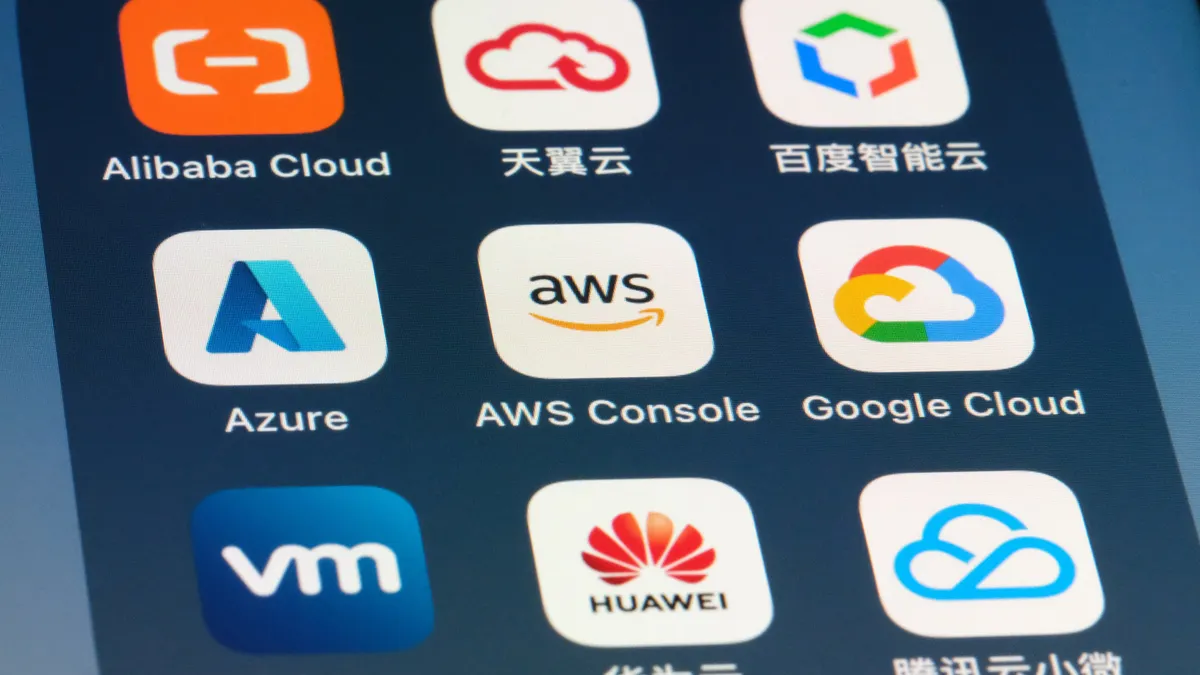
While Microsoft and Google currently sit in the top spots for enterprise AI, the two tech titans along with AWS are all competitors for the dominant role of “company to beat,” — which can change at any time, Gartner said.