

ORLANDO, Fla. — As the CIO role is more deeply tied to business outcomes, leadership qualities can outrank technical expertise for those looking to climb the career ladder.
Although C-suites are expanding to include chief AI roles, the CIO is still seen as the primary owner and executor of technology throughout the enterprise.
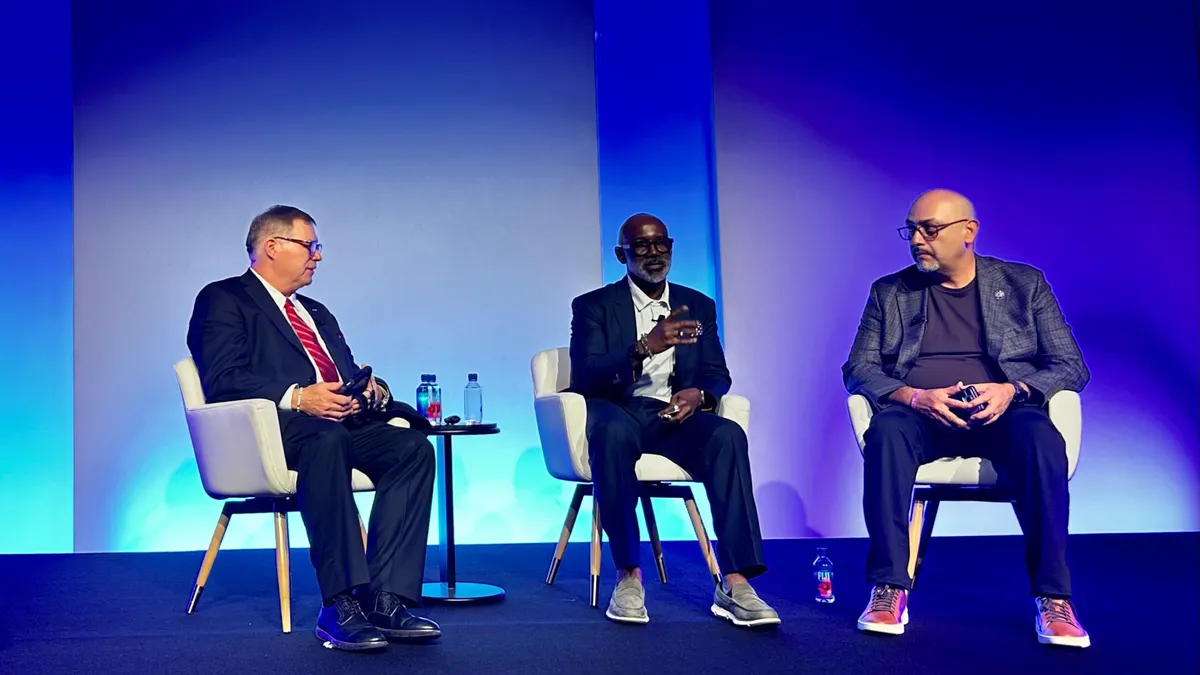
An understanding of the expanding relationships with the C-suite, a honed-in AI business strategy and a stellar team set up today’s CIOs for success, Michael Cato, SVP and CIO at Bowdoin College, said during Gartner’s IT Symposium/Xpo in Orlando last week.
“It's not really my job to understand the technology better than my team does,” Cato said. “My job is about storytelling and strategy and relationships, likely outside of IT as well.”
Leadership qualities
Interpersonal skills have carried Jerry Walker, CIO for the Oregon State Treasury, far in his career, he said. In addition to communication — CIOs are often in charge of telling the story of a project, he said — tech leaders need to command a presence.
It’s a hard quality to quantify, but being someone who can be trusted, either by being transparent or proving themselves in tough situations, adds to an executive’s presence.
“It is a big thing to get to that point, and that lasts throughout your career,” Walker said.
Being dependable and being known for solving problems has also positively impacted Cato’s career trajectory, he said. Knowing when they personally can’t solve a problem, but can find the right person for the task is also a valuable CIO skill, he said.
Leaning on a thriving network is key to becoming dependable, as is connecting with people who can serve as an aspirational reference, Cato said. Early in his career, a mentor was generous with his time, references and recommendations, and it changed how he acts today.
“It was one of those times that helped me realize that if I'm willing to do that for other people as well, then not only am I benefiting them, but it helps me refine the things that I do know and the questions that I'm trying to learn,” Cato said.
Those interested in honing their skills as a CIO should consider building their own “personal board of directors,” Walker said. He’s cultivated a group of people to bounce ideas off of, check in with and to gut-check him on issues. Having a handful of people who can provide insight on professional aspirations and strategy can help an executive stay honest and keep innovating.
Early on in a CIO role, it’s important to assess critical needs, then do that on a continual basis, Cato said. An executive may have been hired because of their technical skills, but they must stay attuned to all other aspects of the job.
“We're human beings. Our default is going to be, in times of stress, to lean into what we know," Cato said. "But that may not be what's needed from you for the new role."
Discerning tech hype
For CIOs with lengthy tenures, the rise of AI has been a small slice of the tech transformations they’ve dealt with in their careers, Walker said.
He experienced the dot-com boom, removing rogue IT, the growth of SaaS and then fighting to centralize a company’s IT strategies. Now, CIOs are expecting to democratize AI, handing it off to thousands of employees with a governance policy in place.
“That is a massive shift for CIOs,” Walker said.
Walker stressed that one of the biggest responsibilities for CIOs is being able to discern what’s real with tech evolution and tech hype. He tries to not pay too much attention to alarmist headlines about the world ending, or AI taking over the workforce — “I usually don't listen too much to the ones that are selling something,” Walker said.
He instead tries to focus on what works well for his organization. In reality, most tech executives couldn’t make an accurate prediction about the future of AI, Walker said. But they can ready themselves with the tools they have, good teams and the ability to change as quickly as possible.
As the CIO role evolves, it’s impossible to know it all, Cato said.
“We can accept that and position ourselves differently,” Cato said. “My job is not to have all the answers. Your job, as my members of the team, is not to have all the answers. We have to rely on each other even more so than we did before.”