NEW YORK — AI deployment is a deeply technical endeavor: IT systems must be ready for integration and data estates prepared to fuel models. But the real decisive factor of enterprise AI adoption success centers on humans.
Tools that employees want to use must support critical processes, according to Lakshman Nathan, EVP and CIO at Paramount.
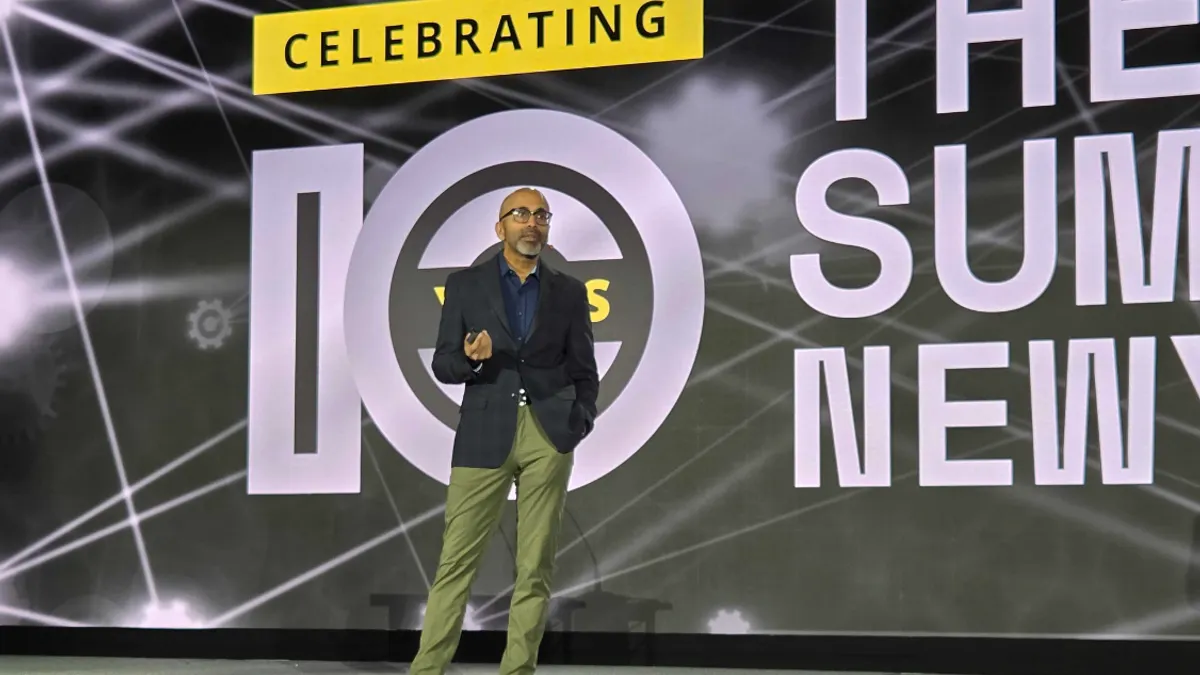
“If AI is going to work for an enterprise, it has to work for everyone,” Nathan said Thursday during a session at the AI Summit in New York.
The entertainment company put in place a framework for internal development and deployment of AI tools, which focused on gaining clear user feedback to address friction points. One guiding principle, Nathan said, was to make employees feel empowered instead of intimidated.
“We invested time up front on how these tools should be used and how data should be handled,” Nathan said.
Paramount is betting on AI adoption to boost productivity as it navigates corporate change. The company completed its merger with Skydance Media earlier this year. This week, the company made another bid to shareholders to acquire Warner Bros. Discovery.
“Artificial intelligence, obviously, is going to have a significant impact across every business, and we do plan to utilize that here,” Paramount CEO David Ellison said during a Q3 2025 earnings call in November. David is Oracle CTO Larry Ellison’s son. “We obviously feel that frontier technology, working with more traditional machine learning is going to really impact how things like search, rec and discovery work on platform. There will be increased efficiencies across the business by deploying those tools.”
But before wider tool deployment commenced, Paramount stood up a vendor management framework to ensure tool providers aligned with the company's desired security posture and governance requirements.
The framework gave senior executive insights into patterns around AI use in the organization and highlighted areas where AI wasn't necessarily the best tool for the job.
“In fact, we pivoted a lot of processes back to simple [robotic process automation] rather than traditional AI,” Nathan said.
AI adoption boost
To introduce employees to AI tools, the company launched an internal roadshow that showcased targeted use cases focused on simplifying key tasks.
“That’s when adoption really started to grow,” Nathan said. The conversations helped identify real world pain points, often highlighting areas where configuration or other simpler changes were the solution instead of AI.
One major theme emerged as teams provided feedback: the need for automating data access. Automating the process of data collection allowed teams to leverage AI for summarization, Q&As and decision making, among other tasks.
“Data is the key to everything,” Nathan said.
In one successful use case, an internal AI bot took disparate employee knowledge bases within Paramount and connected workflows into key systems.
“If it could not solve a problem, it created a ticket and routed it to the right team,” Nathan said.
The tool reduced support tickets with a low initial investment, according to Nathan. Now, the company operates around 40 different AI tools across business users.
“It required collaboration, experimentation and a willingness to rethink operational processes,” said Nathan. “Looking back, the early investment in governance paid off. It gave us the confidence to scale, and it set the stage for what we're doing today.”
Disclosure: The AI Summit is run by Informa, which owns a controlling stake in Informa TechTarget, the publisher behind CIO Dive. Informa has no influence over CIO Dive’s coverage.