Dive Brief:
- Almost 4 in 10 executives plan to boost technology and AI spending as a strategic move against geopolitical disruption and economic volatility, a PwC survey found. The company surveyed 633 C-suite executives in March for the Monday report.
- The boost in tech spending was the No. 1 strategic action taken by executives and landed in the top three responses for 73% of respondents, according to survey results.
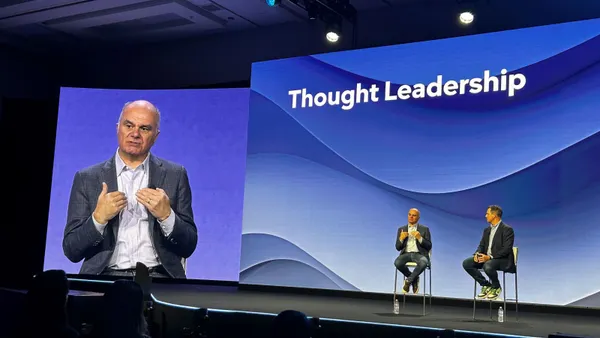
- “There's a strategic imperative that these companies have to be investing, and they have to keep pace,” said Dan Priest, chief AI officer at PwC U.S. “They have to achieve parity, at least an advantage at best, relative to their competitors.”
Dive Insight:
Faced with global disruption and economic headwinds, CIOs and other tech chiefs continue to feel the pressure to deliver on AI's promised efficiency gains quickly.
“Doing nothing or not investing is really not an option,” Priest told CIO Dive. “We’ve been seeing over the last year a steady increase in the amount of investment and expense as a percentage of revenue.”
But ROI concerns are looming as companies pour billions into AI investments. Slightly more than 1 in 5 leaders say their AI investment efforts have yielded significant ROI, according to a DataCamp report published in February. That number jumps to 42% among businesses with mature data and AI upskilling plans in place, which signals two key blockers to AI returns.
“There are proof points out there that are compelling,” Priest said, motivating some companies to push past ROI challenges and continue to invest.
AI has been a key driver of overall tech spend in recent years as vendors launch new products or add AI features onto existing platforms. Meanwhile, AI services spend is soaring, with vendors set to attract nearly $600 million this year — up 40% year over year, according to Gartner data.
With most businesses redoubling AI investment plans, the key challenge for organizations is to find ways to differentiate from their competitors, Priest said.
"If three-quarters of the businesses are taking the same action, you might be chasing table stakes rather than creating a differentiated, sustainable advantage," Priest said.