

Dive Brief:
- AI data center spending will make up more than half of all semiconductor revenue in the next four years, up from 36.5% in 2026, according to a Gartner forecast published Monday.
- The increase in data center spending will help propel global semiconductor revenue to more than $1.6 trillion this year, nearly doubling year over year, according to the research firm.
- While memory revenue remains the primary contributor to overall semiconductor industry growth this year — estimated to account for 54% of 2026 semiconductor revenue — the increase in AI data center revenue share highlights a "shift in where semiconductor value is created and how demand is evolving across the industry,” said Ben Lee, director analyst at Gartner.
Dive Insight:
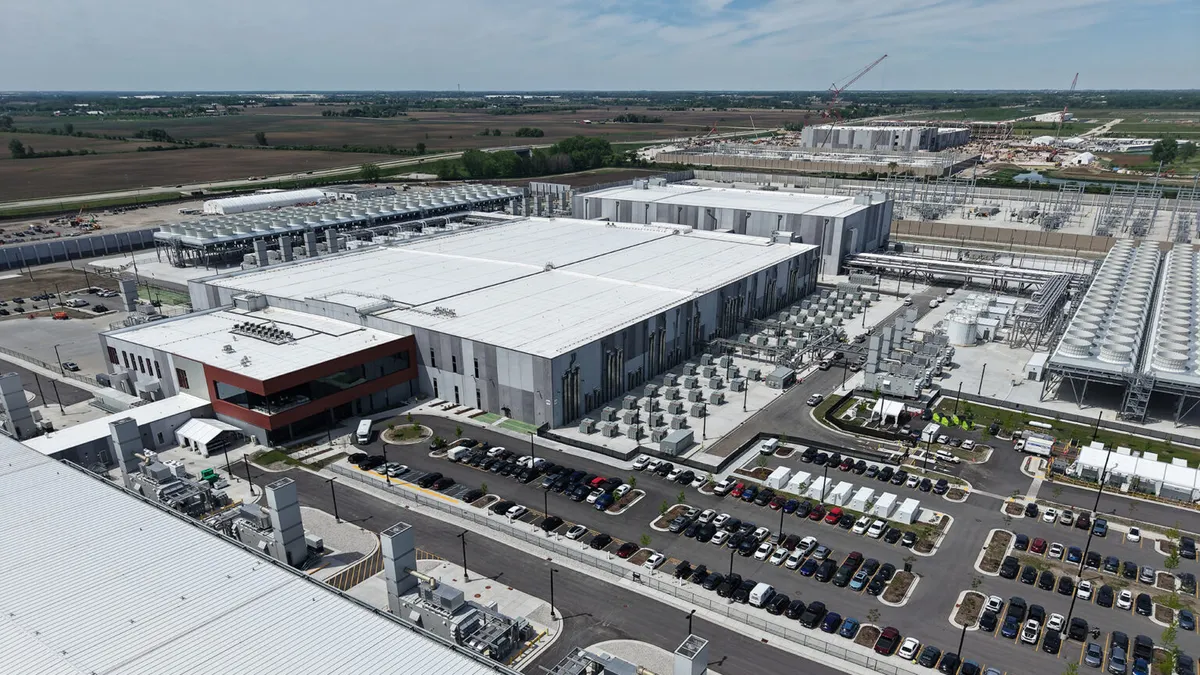
AI demand is fueling more data center construction to support compute. However, enterprise executives are entering a more cautious deployment era as they contend with rising AI costs.
Providers quickly transitioned from flat-rate subscription pricing to usage- or outcome-based models. The pricing shift is not something organizations are managing well, Justin St-Maurice, technical counselor at Info-Tech Research Group, told CIO Dive in an email
“In the early days, the strategy of most vendors has been to get corporations ‘hooked’ on the use of the technology,” he said. “During the adoption phase, the true costs were effectively hidden.”
But now, the bills are quickly piling up. Continuously looping agents are the biggest contributors to rising AI costs, St-Maurice said. The technology double-guesses itself and reprocesses data, driving up final costs in ways that are difficult to predict, he said.
Amid mounting concerns, vendors such as Snowflake, AWS and Oracle are implementing features to help enterprises control AI costs.
However, CIOs and other executives looking to better manage their AI overhead might have to look to China, which has created open-source models that can compete with U.S. frontier models, St-Maurice said. Depending on the use cases, CIOs should consider using these models.
“The strategy moving forward will include multitier computing, with desktop devices doing most of the grunt work and escalations for complex tasks when required,” St-Maurice said.
Travelers Insurance built its own large language model to help mitigate rising AI costs. TravelersLLM handles insurance-related queries and is cheaper for the company to run than frontier models, according to Mojgan Lefebvre, EVP, chief technology and operations officer at Travelers.
The company still uses frontier models for broader reasoning or coding queries. Yet the cheaper internal model helps offset higher frontier model costs, Lefebvre said in a July interview.