
Dive Brief:
- Hyperscaler infrastructure spending spiked in 2025, nearly tripling year over year to $142 billion during the third quarter alone, according to Synergy Research Group’s analysis. The investments helped boost a comparable 170% increase each quarter in added capacity, the firm said in a December report.
- AWS, Microsoft, Google Cloud and Oracle have all contributed heavily to an ongoing building boom that accelerated in the last three years. “The growth in metrics has been particularly strong since ChatGPT was launched at the end of 2022 and AI fever took hold,” John Dinsdale, chief analyst at SRG, said in an email. “Since then both quarterly hyperscale capex and the amount of capacity added each quarter have ballooned.”
- The trend has helped consolidate compute geographically, SRG found. The U.S. now commands 55% of worldwide hyperscaler capacity, up from 52% three years ago. The three largest providers — AWS, Microsoft and Google Cloud — control 58% of all hyperscale data center capacity globally, the research found.
Dive Insight:
Hyperscale heavyweights have plowed forward with massive procurement and construction plans, despite growing speculation around a potential AI bubble.
AWS, which accounts for nearly one-third of a global market for public cloud, shelled out roughly $125 billion in capex in 2025, Amazon SVP and CFO Brian Olsavsky said during an October earnings call. The company expects that amount to increase in 2026.
Its competitors aren’t far behind.
Microsoft’s capex tab was nearly $35 billion during its Q1 2026, which ended Sept. 30. Google Cloud raised its 2025 capital investment expectations to $93 billion. And Oracle invited investor scrutiny by bumping its annual capex number up to $50 billion in December.
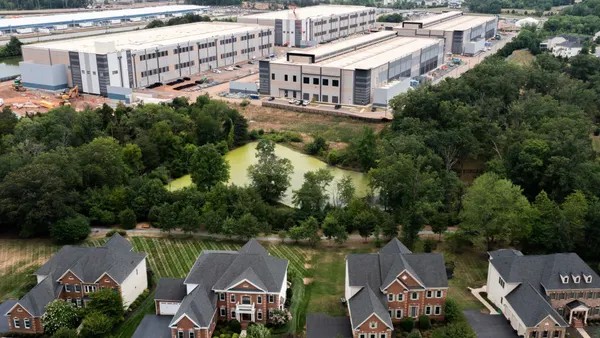
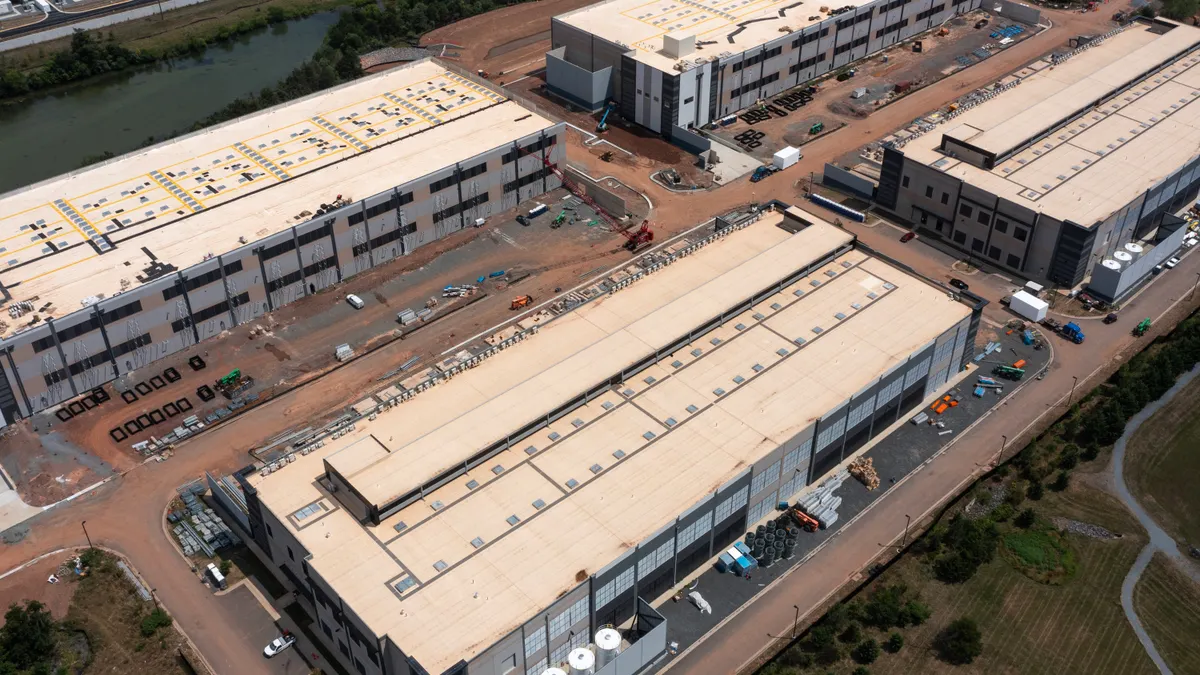
The billions are buying servers, processors and other hardware to fill out cloud facilities in various stages of construction. The number of hyperscaler data centers has almost tripled since early 2018 to nearly 1,300, according to SRG research. Operation capacity has grown even faster as the average data center size has risen.
Currently, there are an additional 770 hyperscale projects in the works, SRG estimated.
Demand for AI-specific compute services has also spurred growth among an emerging class of GPU specialist providers called neoclouds and neoscalers. The rising players, led by CoreWeave, were expected to add $23 billion to the global market in 2025, according to SRG research published in November.
“Cloud had a transformative impact on the world of IT,” Dinsdale said. “Generative AI is having an even bigger impact.”