


Dive Brief:
- Microsoft expanded its sovereign cloud capabilities to enable local, disconnected environments, including support for large AI models, the tech giant shared last week.
- Qualified customers can bring large AI models into sovereign environments through Foundry Local, Microsoft’s on-device AI inference product used for running models locally in “fully disconnected environments,” Douglas Phillips, president and CTO, Microsoft Specialized Clouds, said in a blog post.
- Azure Local and Microsoft 365 Local are also now available globally in Microsoft Sovereign Cloud to support confidential environments. Businesses can run critical infrastructure and keep governance and policy controls through Azure Local with no public cloud connectivity, while Microsoft 365 productivity workloads — Exchange Server, SharePoint Server and Skype for Business Server — run on Azure Local.
Dive Insight:
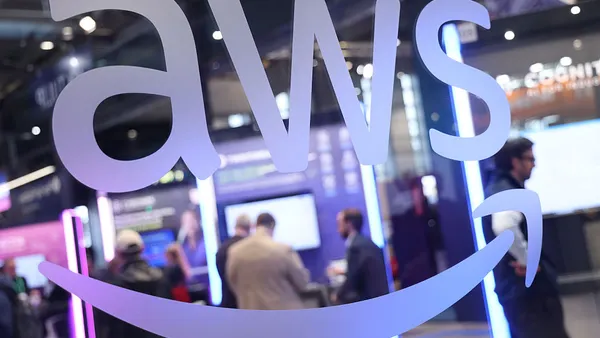
Businesses are rethinking cloud strategies amid expanding sovereignty requirements, as well as risks posed by global conflicts. AWS’ recent service disruptions in the Middle East after drones attacked local facilities highlighted the perils for enterprises.
Storing data within global cloud environments was already a concern for three-fourths of business leaders, according to Kyndryl’s 2025 Cloud Readiness Report. Digital sovereignty regulations have also prompted 65% of business leaders to alter their cloud strategies, according to the Kyndryl report.
Global sovereign cloud spend is expected to increase 35.6% this year, according to a Gartner report published in February.
“Customers facing strict sovereignty and regulatory requirements are clear that a fully disconnected sovereign private cloud is a key business need,” Phillips said in the blog post.
Business operations in a disconnected environment “surfaces constraints that go beyond traditional cloud assumptions,” Phillips said. “External dependencies may be unacceptable, connectivity may be intentionally restricted and operational continuity is a business imperative.”
Microsoft is far from the only technology company to recognize enterprises’ growing interest in sovereign offerings.
IBM in January launched Sovereign Core, a platform for businesses to build and manage cloud and AI workloads while maintaining control and oversight of the infrastructure environment. Also in January, AWS made its European Sovereign Cloud generally available to customers.
SAP deployed its EU AI Cloud in December to support customers’ sovereignty needs, and Google continues to expand on its array of sovereign cloud offerings.