


Dive Brief:
- In its post mortem, Microsoft outlined what went wrong to cause the Nov. 12 outage of Microsoft 365 services used by more than 430 million people, pointing to a latent defect from July that overwhelmed servers and caused a massive traffic jam lasting more than 24 hours.
- The report included a set of 13 action items, three of which reference observability practices, or the ability to measure a system’s current state using external signals. In that vein, Microsoft plans to update its diagnostics collection and change auditing to pinpoint issues faster, build better detection systems for extended capacity loss before running out of spare room, and improve detection and automated notification to up the speed of communication with customers.
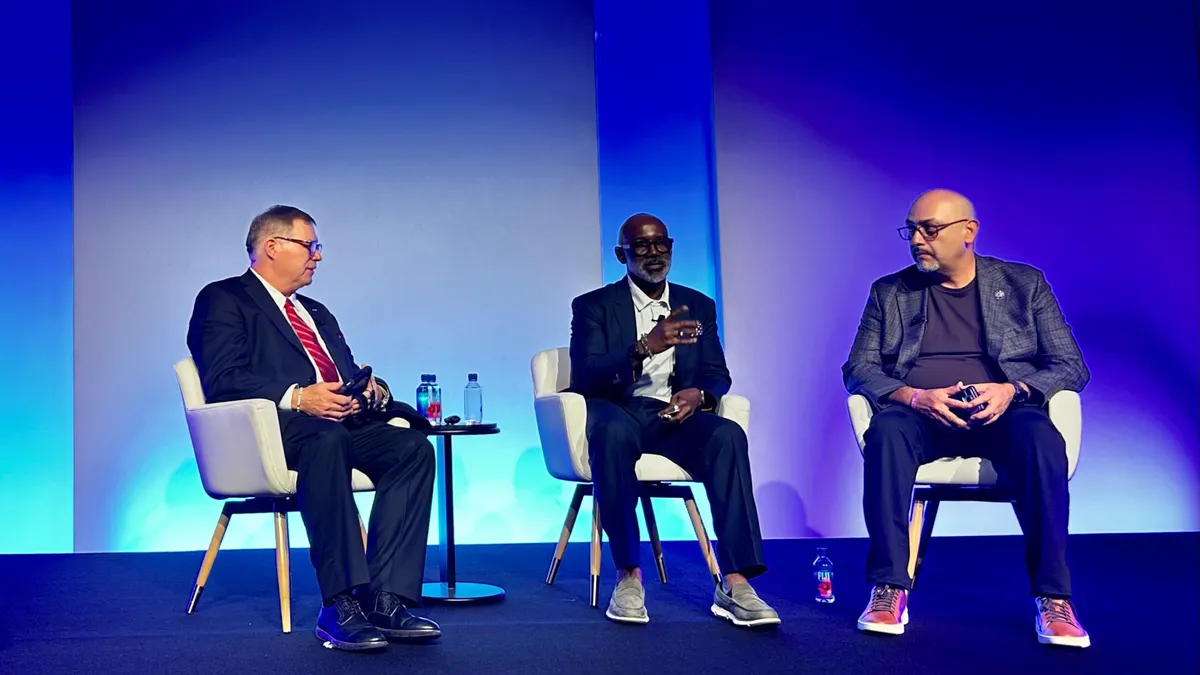
- While it’s not a new concept, observability is developing into a key competency for IT in the AI era, according to Mark Moccia, VP and research director at Forrester. “When the technology is capable of detecting vulnerabilities in your system much, much faster than it ever has before, you need best in class process and procedures to discover these things and shut them down before they cause damage,” Moccia told CIO Dive.
Dive Insight:
For CIOs, two-track timelines of remediating tech debt while rolling out modern features have collided.
IT departments are contending with frontier AI models capable of finding and exploiting weaknesses faster than ever before, creating a complex dynamic where legacy tech could be housing the same vulnerability in thousands of instances while new features expand a company’s attack surface, according to Moccia.
The result is an uptick in outages in 2026, culminating in a succession of high-profile disruptions earlier this month that affected business operations, flights, banks and the federal government. To get ahead of the curve, CIOs need to focus on the unglamorous work of building out processes and procedures that can turn reactive responses into proactive strategy — and observability is gaining ground as a tool to close the gap, Moccia said.
A report co-authored by Moccia, which acknowledged that policies and procedures is “boring work,” suggested that CIOs begin by identifying and prioritizing systems critical to business outcomes and then mapping their dependencies to understand what the blast radius of a potential outage might look like.
CIOs should set an observability by design practice as enterprises build applications or update systems, where production monitoring, dashboards, alerting, detection and response are an architectural forethought. But they’ll also need to elevate observability as an end-to-end strategy rather than as a discipline that could get trapped in silos by cohesively bringing together teams including engineering, networking and infrastructure along with third-party providers.
“The problem ... there's not a well enough cross-organization coordinated effort to really understand, as features are introduced, what they’re doing to the underlying compute and the network paths, et cetera, that are reliant upon those transactions for processing,” Moccia said.
Just how critical observability is to an organization depends on the industry, with massive cloud providers such as Microsoft and those dealing with sensitive information such as financial services facing higher stakes than others, according to Moccia. Even so, “based on our research and these incidents, it is certainly fast rising across the board,” he added.
Indeed, outages show no signs of slowing down. More than 25% of organizations are experiencing disruptions on a weekly basis if not more frequently, with third-party or cloud provider failures listed as the most prominent cause, according to the 2026 observability forecast from New Relic. For enterprises, spotting a problem quickly can be an essential component of how they respond, according to the report.
“Observability as a discipline is not: Update your documentation, buy some tools, install them, and then they're just going to run,” Moccia said. “This is an everyday, always-on kind of practice, and it's only going to get more and more important to make it central in focus because the pace of vulnerability discovery is not slowing down. It's going to get faster.”