

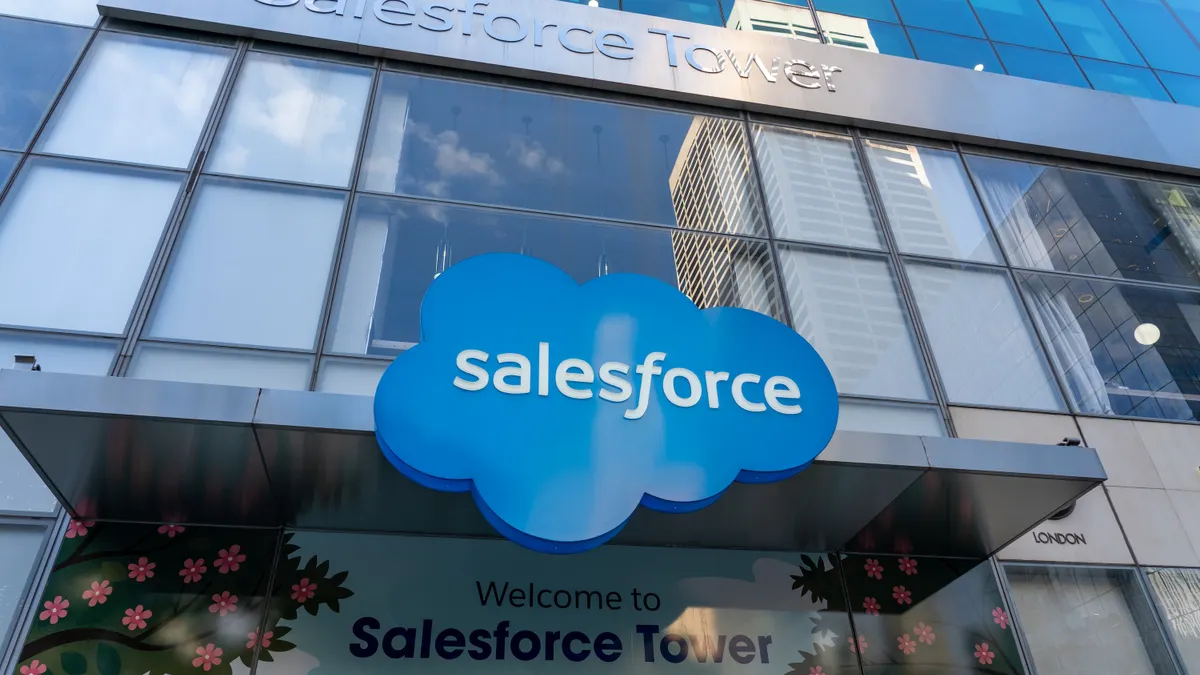
Salesforce and Databricks rolled out agentic AI agent governance features on Wednesday, a move to add more controls over how agents operate across enterprises as they are quickly adopted into workflows.
Earlier this week, AWS launched Agent Registry, a centralized platform to house, build and govern AI agents across frameworks and designs.
The product launches reflect an effort to tighten agentic AI’s access. Enterprises are often working with multiple agentic products, piloting several projects to find the best use cases and ROI. But that can lead to agent sprawl, presenting security risks and high operations costs.
Salesforce said in its announcement that a quickly moving AI landscape needs granular control to scale. Both companies released the features as part of existing products — Salesforce’s Agent Fabric and Databricks’ AI Gateway.
“AI agents now orchestrate multi-step workflows across models and systems, often touching sensitive data at every step,” Databricks said in its announcement.
Salesforce now allows Agent Fabric users to standardize token management and compliance across a multi-large language model stack, and enables agents to operate with specific permissions. It could be tailored for sensitive tasks like money movements or legal reviews, Salesforce said.
The company's Agent Broker product also includes features that let users define fixed handoff rules while LLMs handle reasoning.
Databricks' expansion of AI Gateway allows users to control LLM access, govern how agents use APIs and apply policies around which agents can access which internal systems.
AI Gateway will also log requests in its Unity Catalog with dollar amount costs, as AI spending falls under scrutiny.
Choosing the right tool
CIOs seeking the best governance product fit should assess their existing architecture, said Thomas Randall, research director at Info-Tech Research Group, in an email.
“An agentic governance tool via Salesforce will make more sense if you are deeply embedded in the Salesforce ecosystem, rather than bringing in a separate tool that incurs implementation and integration costs or even architectural shifts,” he said.
CIOs must be clear on the use cases they are trying to solve for when speaking with and choosing vendors, Randall said. As agentic AI and its governance strategies are so quickly developing, most tools will have similar qualities. He suggested giving vendors the organization’s top four use cases and letting them show how their products best apply in real conditions.
Randall also suggested tech leaders think of FinOps and agentic governance as one in the same, as agentic workflows have a variable cost structure.
“A vendor positioning itself as your agentic control plane must be able to produce a unified cost ledger across all the agents, models, and tools in scope, including third-party components,” he said.