CAMBRIDGE, Mass. — If CIOs need a use case to convince businesses why modernization is a critical investment, they got it with AI. Today, old-school infrastructure can slow data- and compute-hungry enterprise AI ambitions.
But building the modernization roadmap can be tricky for technology executives, who must balance what processes to upgrade now while keeping legacy systems operational — and all of it in budget. Sometimes, the best plan of action is to determine what not to modernize.
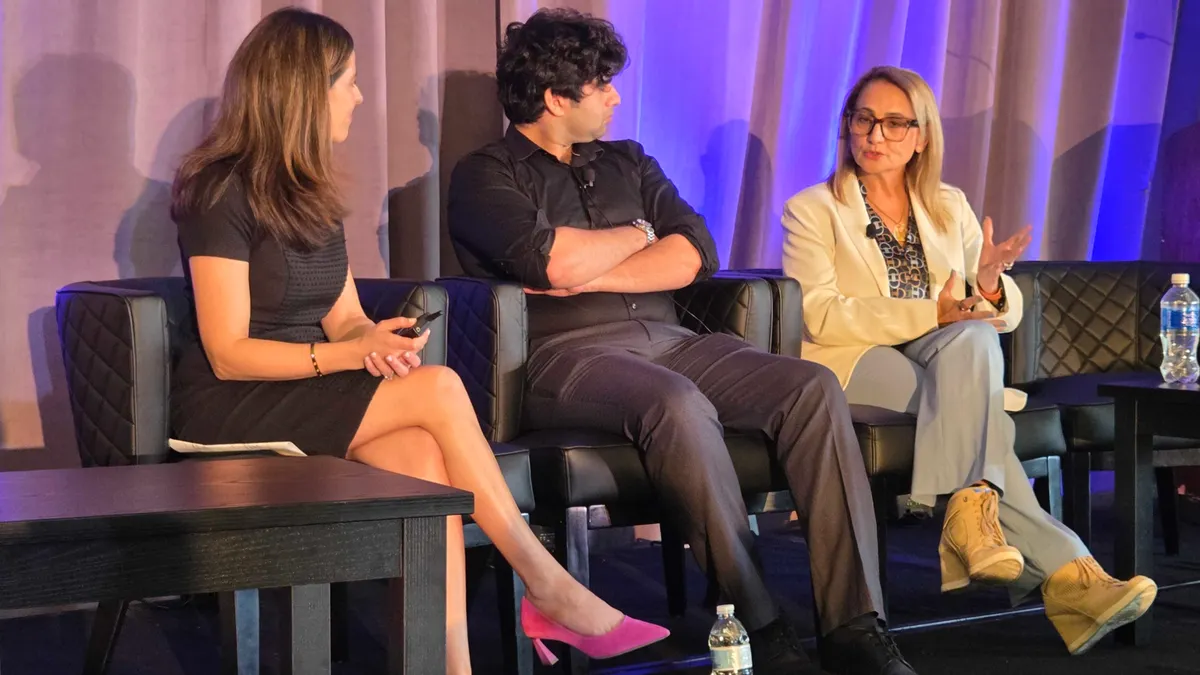
To help ease decisions, Liberty Mutual Insurance puts the focus on key metrics and the outcomes that a modernization effort can yield, said EVP and Global CIO Monica Caldas, speaking during a panel at the 2026 MIT Sloan CIO Symposium.
"We did a technical debt radar as an example, to understand what we need to do now, versus what we need to monitor versus what is stable," Caldas said. The framework includes variables to help the company understand, from a business and product perspective, where the focus should lie.
Travelers Insurance took a similar approach, focusing its modernization efforts on systems that elevated customer experiences or boosted operations.
"You want to modernize what's in the critical path," said Mojgan Lefebvre, EVP and chief technology and operations officer at Travelers, speaking on the same panel. "We've chosen to not modernize some things and actually isolated subsystems behind APIs and then invested around it where the customer value or productivity was."
AI adoption plans are influencing modernization recipes. Travelers is aiming to identify priority areas, starting where AI deployment is critical, Lefebvre said. For businesses struggling with data accessibility and AI adoption plans, modernization is key, she said.
"At the end of the day, the goal is to, in the right order, modernize as much as possible," Lefebvre said.
AI-focused upgrades
Insurance industry businesses such as Travelers and Liberty Mutual have pushed forward to adopt AI, with an eye on applications that can help lower operational costs and improve customer service. Much like their peers in the banking sector, modernization of legacy systems has been a prerequisite to tackle use cases.
Travelers is reaping the rewards of earlier cloud modernization efforts, which have helped establish a foundation for AI, according to Lefebvre.
"We were lucky at Travelers that, eight years ago, we very aggressively started modernization on our platforms," Lefebvre said. "We've got 70% of our compute in the cloud."
That foundation has enabled the insurer to pursue AI adoption initiatives including an opportunity to rethink parts of the claims process, Lefebvre said.
"We're thinking very differently about how you handle a call," said Lefebvre. The company plugged automation into the way personal auto insurance customers can enter their first notice of loss after physical damage. The change is allowing most customers to complete the effort with support from AI agents.
Modernization decisions also require clarity around alignment at the executive level, Caldas said.
"You have to be aligned at the top of the house, because you're making decisions about investments," Caldas said. "But then it doesn't stop there — it has to actually trickle down."
Correction: This article has been updated to better reflect where the notice of loss process has been automated.