

Dive Brief:
- AI is playing an outsized role in how Yum Brands — the parent company of chains Taco Bell and KFC — finds its identity following the sale and divestiture of Pizza Hut, executives said during a Tuesday earnings call. The company reported a 3% increase in sales across all brands for the quarter.
- Executives touted the role of Byte by Yum — the company’s SaaS platform of AI-driven tools for customers, processes and internal teams — during the call. The company also rolled out a kitchen management capability called the Bite Kitchen Display System to KFC restaurants, which has produced 8% faster drive-thru speeds, 12% reduction in refunds and a reduction in delivery driver wait times, CFO Ranjith Roy said during the call.
- Yum Brands plans to continue to develop the tech suite, and other AI capabilities, to drive personalization for customers. “Byte by Yum is creating better consumer experiences, simplifying operations, and providing greater value to franchise partners,” Roy said.
Dive Insight:
Yum Brands has spent the last few years defining its AI strategy, including establishing tech leadership for Byte by Yum in Jim Dausch as its president, and as the company’s chief digital and technology officer.
The company spent 2025 rolling out AI tools to more of its restaurants, partnering with tech giants — such as AWS, Microsoft and Nvidia — to deploy voice AI agents, and built out its proprietary platform to become more AI focused.
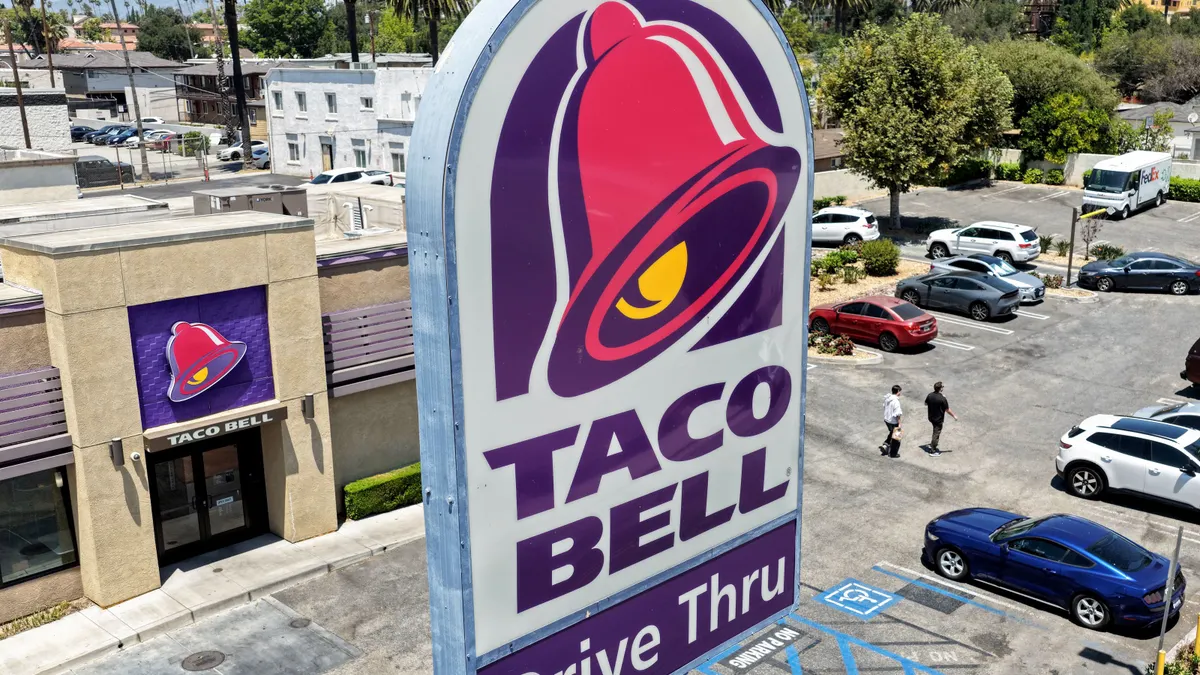
More than 900 Taco Bell restaurants are now using voice AI in the drive-thru, and executives project it will expand it to more than 1,500 restaurants by the end of 2026, Roy said. As a result, Taco Bell has seen a 6% improvement in overall drive-thru satisfaction, and about 1.5% sales uplift, Roy said.
Roy mentioned Byte Coach, a tool that would help general managers and leaders identify and fix resultant-level issues more effectively. The brands are also using digital capabilities and AI to deliver more personalized experiences, he added, including in how its marketing team is connecting with consumers.
Both moves align with other fast-casual restaurants that have sought out how to tailor customer experiences and streamline efficiency with technology. Starbucks is using AI to make in-app recommendations to customers and will be testing similar features in the drive-thru, while Wingstop uses an AI-driven personalization engine targeting guests with targeted offers.
“We fundamentally think of ourselves as a hospitality business, which involves people and franchise partners,” Roy said. “AI is coming to life in a way that empowers our people to deliver a great experience for consumers and drive faster business growth.”
He added that the company expects AI to be “transformative to the business,” and said the productivity gains it’s seeing are focused on enabling workers to deliver the best hospitality experience possible, which in turn, accelerates business growth. Roy estimated AI use was up 40% across the enterprise, shifting from assisting with day-to-day tasks to embedding AI into the capabilities of the organization.
It's in line with what many enterprises are reporting about AI use — satisfaction with AI’s value is climbing, but cost savings are not among the top benefits.
“Looking ahead, our AI pipeline is focused on shifting from AI testing to adoption and then to scaling impact, ensuring that the capabilities we develop translate into measurable improvements in restaurant operations, consumer experiences and franchisee economics,” Roy said.